
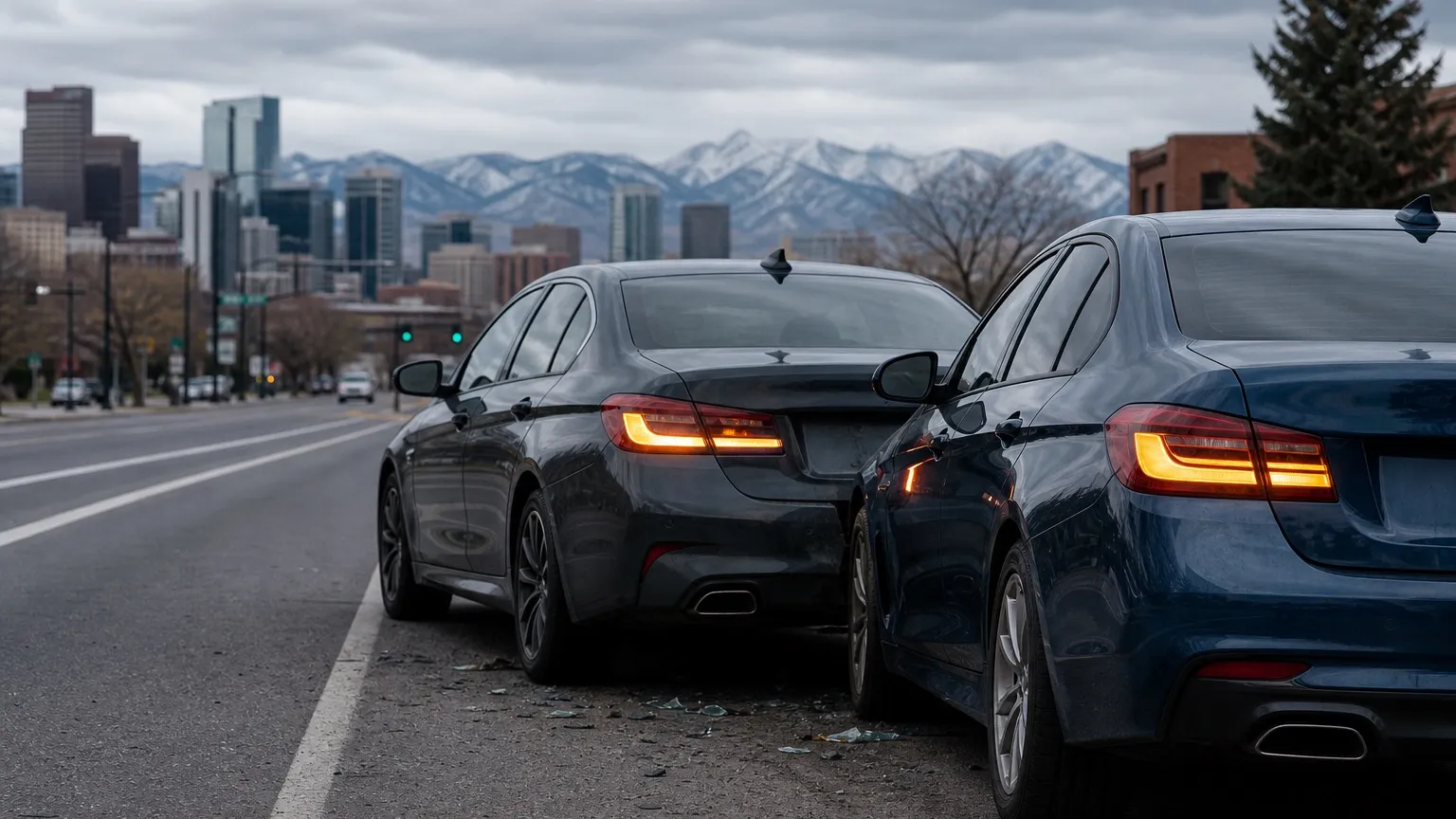
First make sure everyone is safe and call 911 if anyone is hurt. Then report the crash to the police, exchange information with the other driver, take photos, and get checked by a doctor even if you feel fine. After that, tell your insurance company, be careful with statements and quick offers, and keep a record of everything.
Here is what each step looks like in Denver and under Colorado law.
1. Stop, stay safe and call 911 if needed
Colorado law requires a driver involved in a crash that causes injury or damages another vehicle with someone in it to stop at the scene, or as close as possible, and stay there until the required information has been exchanged.
If anyone is hurt, call 911 right away. Colorado law also expects drivers to give reasonable help to an injured person, such as arranging medical care when it is clearly needed.
If the crash happens on a divided highway, nobody is hurt and the cars can be driven safely, Colorado law asks drivers to move off the traveled lanes to a safer spot nearby before exchanging information. Turn on your hazard lights.
2. Report the crash to the police
Colorado law requires the driver of a vehicle in a crash that causes injury, death or any property damage to notify the police right away. In Denver, the city tells drivers to report the crash by calling the local police station or 911.
Sometimes Denver declares an "Accident Alert," usually during bad weather, when officers cannot respond to every crash. During an Accident Alert, you call 911 and a dispatcher decides whether an officer will come. If no officer comes, the drivers still exchange information, and the crash must still be reported.
If no officer was called to the scene, the Colorado Division of Motor Vehicles lets drivers file a crash report online. This is called a "counter report." Police do not investigate it; it is kept for records only.
If an officer does come, ask for the officer's name and the case or report number. You will need it later to order the crash report.
3. Exchange information
Under Colorado law, drivers in a crash must give each other their name, address and vehicle registration number, and show their driver's license if asked. The Denver Police Department also tells drivers to exchange proof of insurance. If an officer asks, you must show proof of insurance.
It also helps to write down:
- The other driver's phone number and insurance company and policy number
- The license plate, make, model and color of each vehicle
- The exact location, time and weather
- The names and phone numbers of any witnesses
Be polite and stick to facts. You do not need to argue about who caused the crash at the scene.
4. Take photos
If it is safe, use your phone to take pictures of all vehicles from several angles, the license plates, the road, traffic signs and signals, skid marks, debris, and any visible injuries. Photos taken right away are often clearer than anyone's memory weeks later.
5. Get medical care
Some injuries, such as neck, back and head injuries, may not hurt much at first. Get checked by a doctor as soon as you can, even if you feel fine, and tell the doctor about the crash. Follow the treatment plan and keep your appointments. Medical records made close to the crash show how you were hurt.
6. Tell your insurance company
Most auto policies require you to report a crash promptly. Call your own insurance company, give the basic facts and get a claim number. Check your policy for what it asks you to do and by when.
7. Be careful with statements and early offers
The other driver's insurance company may call soon after the crash. It may ask for a recorded statement or offer money quickly. Before you answer, keep in mind:
- You can ask to talk later, after you understand your injuries.
- Stick to facts you know. Do not guess about speeds, distances or how badly you are hurt.
- An early offer may come before you know the full cost of your care or the time you will miss from work.
- Signing a release usually ends your right to ask for more for that crash. Read anything carefully before you sign it.
8. Keep records
Keep a folder, paper or on your phone, with the police case number or crash report, photos, medical bills and visit summaries, receipts for prescriptions and travel to appointments, repair estimates, letters from insurance companies, and notes on missed work and how you feel each week.
Colorado also sets time limits for injury claims, so it is wise not to wait too long to get answers.
If you were driving for work
If you were on the job when the crash happened, for example making deliveries or driving between job sites, it may also be a workers' compensation matter. Tell your employer in writing as soon as you can. In some cases, both a workers' compensation claim and a claim against the other driver can apply.
When to call us
You do not need a lawyer to report a crash or call your insurance company. If you were hurt, if fault is disputed, or if an insurance company is asking for a statement or a signature, call us. We can explain where you stand, in English or Spanish.